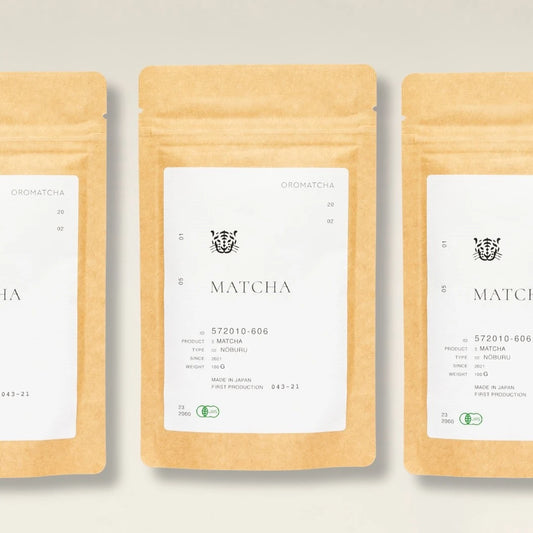
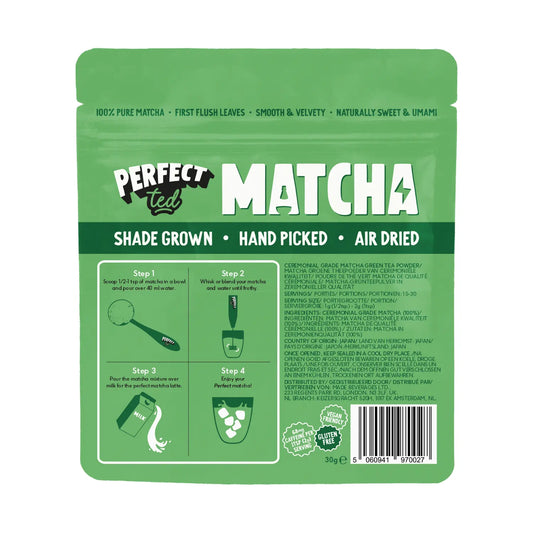
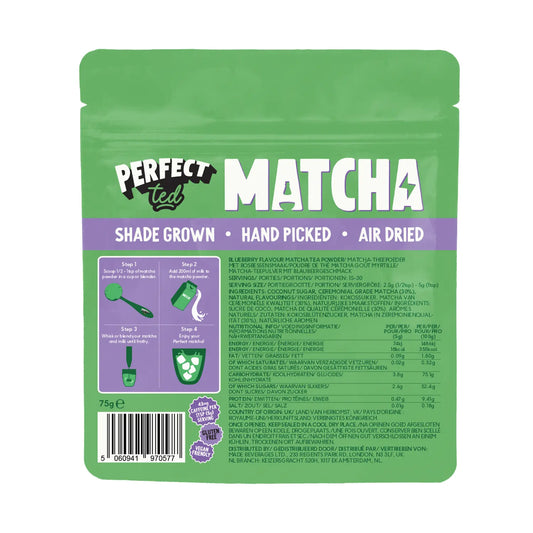
In just a few years, matcha has moved from the ceremonial bowls of Japanese monks to one of the most searched drinks in the wellness category. Along with popularity came claims about its effects: some accurate, some simplified, some pulled from studies that actually say something a little different than the headline suggests. This article looks at what has genuinely been studied, with specific research, numbers, and honest commentary where the evidence is weaker than the marketing implies.
What is matcha and how is it different from green tea?
Matcha and green tea come from the same plant - Camellia sinensis - but they are consumed in completely different ways. The bushes are shaded for 3–4 weeks before harvest, the leaves are picked by hand, then ground on stone mills into a fine powder. When you drink matcha, you consume the entire ground leaf, not an infusion you pour away after a few minutes. This is why it carries a higher concentration of every active compound.
Curious how the process actually works and what the different matcha grades mean? Check our introductory guide, from shading the bushes to choosing your first matcha.

This matters for interpreting research: most of the scientific literature deals with brewed green tea, not powdered matcha. Matcha delivers the same compounds, but at a higher dose per serving, which is both its advantage and the reason results can't be carried over uncritically between these two forms of consumption.
The "137 times" myth: A 2003 study (University of Colorado) compared matcha with one specific tea bag, Starbucks China Green Tips, not with leaf green tea as a category. A fair reading of that same study: matcha contains 3 to 10 times more EGCG than good-quality leaf tea. Still a meaningful difference, just not 137 times.
What does matcha contain? Active compounds
Four compounds matter most for how matcha works:
EGCG (epigallocatechin gallate) is the dominant catechin and one of the most studied plant polyphenols. It acts as a strong antioxidant, neutralizing free radicals and reducing inflammation. Research links it to potential effects on LDL cholesterol, weight management, and protecting cells from oxidative stress.
L-theanine is an amino acid found almost exclusively in tea. It stimulates alpha wave activity in the brain, the same state associated with calm focus. Combined with caffeine, it creates a synergy that makes matcha feel different from other caffeine sources. For more on exactly how L-theanine interacts with caffeine, see our article L-theanine – what it is and how it works with caffeine.

Caffeine: a 2 g serving of matcha contains around 60–70 mg (average ~63 mg), roughly the same as an average espresso shot. Thanks to L-theanine, the effect tends to feel gentler and more stable over time, though there isn't strong evidence that L-theanine itself slows caffeine's absorption in the gut.
Chlorophyll gives matcha its intense green color: the longer the bush is shaded, the more chlorophyll it produces and the deeper the powder's shade. It has antioxidant properties, though it plays a smaller role in matcha's health profile than EGCG and L-theanine.
Matcha also contains vitamins A, C and K, along with potassium, calcium and iron, though in amounts that are fairly modest against daily requirements at one or two servings a day.
| Compound | Main effect | Strength of evidence |
|---|---|---|
| EGCG | Antioxidant, anti-inflammatory, cell protection, effects on LDL and metabolism | Strong (many RCTs and meta-analyses, mostly for green tea) |
| L-theanine | Calm focus, stress reduction, synergy with caffeine, alpha wave activity | Strong (multiple RCTs for the caffeine combination) |
| Caffeine | Alertness, adenosine receptor blocking, thermogenesis support | Very strong (one of the most studied active compounds) |
| Chlorophyll | Antioxidant properties, responsible for the intense green color | Moderate (fewer clinical studies than EGCG and L-theanine) |
| Vitamins A, C, K; potassium, calcium, iron | General nutritional support | Present, but modest in amount at 1–2 servings a day |
Matcha and focus: the L-theanine and caffeine synergy
This is matcha's best-documented effect, and what most people are actually looking for when they reach for it.
Caffeine blocks adenosine receptors in the brain: tiredness fades, alertness rises. The problem is that caffeine alone can cause restlessness and a sharp energy drop a few hours later. L-theanine softens that effect: it stimulates GABA-A receptors, limits excess glutamate uptake, and increases alpha wave activity in the cortex. The result is focused alertness without the jittery edge.

A systematic review of clinical trials published in Cureus (Sohail et al., 2021) confirmed that the combination of L-theanine and caffeine improves reaction speed, accuracy in attention tasks, and working memory more effectively than either compound alone. Haskell's study showed improvements in numeric memory and attention tests with the combined supplementation, but not with caffeine or L-theanine on their own. A 2025 study (British Journal of Nutrition, Nawarathna et al.) confirmed the effect even in sleep-deprived participants, suggesting the synergy holds up under tougher conditions too.
Matcha doesn't replace coffee, it offers a different kind of energy. The L-theanine and caffeine synergy is one of matcha's best-documented effects: it improves reaction speed, attention and working memory more effectively than caffeine alone. For many people this energy feels calmer and steadier than coffee's, though "crash" avoidance specifically wasn't what these studies set out to measure.
Matcha and heart health
Green tea's effect on the cardiovascular system is one of the most studied areas in this field, with the caveat that most research looks at brewed tea, not powdered matcha. Since matcha delivers the same active compounds at a higher concentration, the findings can't be ignored, but they do call for some caution.
A meta-analysis published in Nutrition Journal (Xu et al.), covering 31 randomized trials with 3,321 participants, found that green tea consumption lowered LDL cholesterol by an average of 4.55 mg/dL and total cholesterol by 4.66 mg/dL. A separate meta-analysis of 13 trials (Scientific Reports, 2014) confirmed a reduction in systolic blood pressure of around 2 mmHg. A meta-analysis by Wang et al. (Heliyon, 2023), covering 11 trials in overweight participants, additionally found reductions in triglycerides and waist circumference along with an increase in HDL. Harvard Health Publishing's 2024 review confirms these directions, while noting that more human studies are needed before the findings can be applied confidently to matcha as a form of consumption.
The effects are statistically significant but modest in size. Matcha doesn't replace cardiac treatment or prevention. As part of a diet, it can be a valuable addition, particularly if it replaces drinks with a worse health profile.
Matcha and metabolism
This is where accuracy matters most, since this particular property of matcha tends to get the most exaggerated.
The mechanism is real. EGCG inhibits the COMT enzyme, which breaks down noradrenaline, a hormone that drives thermogenesis, the process of burning calories as heat. Caffeine reinforces this effect through a separate pathway. A systematic review of 15 clinical trials confirmed a positive effect of catechins on thermogenesis and fat oxidation. One study in the American Journal of Clinical Nutrition found thermogenesis rising from a baseline 8–10% to 35–43% of daily energy expenditure with a catechin-rich extract.

In practice, this translates to roughly 60–80 extra calories burned per day, about the same as a fifteen-minute walk. The effect is real but limited. Matcha isn't a weight-loss supplement and doesn't replace diet or exercise, but it can be one of several small factors that add up over time.
Matcha and skin: what does the research say?
Matcha shows up more and more in skincare conversations. EGCG, the dominant catechin in matcha, has several well-documented mechanisms relevant to skin health, though it's worth separating what's backed by research from what's just a promise without evidence.
Protection against UV radiation. A 2025 review in PMC, covering 21 studies, confirmed that green tea catechins, applied topically or taken orally, protect skin from damage caused by UVA and UVB radiation. EGCG inhibits matrix metalloproteinases (MMPs), enzymes that break down collagen and elastin in response to sun exposure. The effect doesn't replace sunscreen, but it can complement it.
Anti-inflammatory and antibacterial action. EGCG inhibits the growth of Cutibacterium acnes (the main bacteria behind acne) and reduces skin inflammation. A 2025 review in MDPI lists acne, psoriasis and seborrheic dermatitis as areas where EGCG shows therapeutic activity, though most clinical studies are small and need confirmation.
Slowing skin aging. A study by Jia et al. (Clinical, Cosmetic and Investigational Dermatology, 2023) found that EGCG protects skin fibroblasts from UVA-induced photoaging: it reduces DNA damage and supports collagen production. Research also suggests EGCG may help stimulate skin cell regeneration.
An important caveat: Most of the research on EGCG and skin involves extracts applied topically or used in high supplemental doses, not a daily cup of matcha. The cosmetic benefits of regularly drinking matcha are promising but harder to measure. Matcha isn't an anti-wrinkle cream, it's a drink that can support skin health from within, as part of a broader diet.
Matcha, mood and sleep quality
In 2024, PLOS ONE published the results of a year-long, placebo-controlled randomized trial (Uchida et al.) involving 99 people aged 60–85 with mild cognitive decline. Over 12 months, half the participants took 2 g of matcha daily, the other half a placebo. Results: a statistically significant improvement in emotional perception and sleep quality in the matcha group.
Worth noting: some of the study's authors work for ITO EN, a Japanese tea company. The study received no external funding, which the authors state openly. That doesn't discredit the results, but it's useful context when interpreting them.

A separate study (Baba et al., 2021) with 42 participants found that after two weeks of taking matcha, reaction times on the Stroop test were lower in the matcha group, particularly after a mild stress trigger. Matcha helped maintain attention under pressure.
Animal studies (Kurauchi et al., Nutrients, 2023) suggest a potential antidepressant effect through activation of the dopaminergic system. This is a promising direction, but results from mice don't translate directly to humans and need confirmation in clinical research.
Is matcha healthy? What science really says
Matcha has a genuinely interesting profile of active compounds. It's neither a miracle cure nor an overhyped trend: the truth sits somewhere in between.
State of the evidence, summarized
Well documented: the L-theanine and caffeine synergy → calm alertness, improved attention and reaction time. This is the most strongly studied effect, confirmed across many RCTs.
Promising, needing more human research: effects on LDL and blood pressure (strong data for brewed green tea, weaker for powdered matcha), sleep quality and mood (one solid RCT from 2024), metabolism (real but modest effect), skin protection against UV and aging (promising EGCG data, but mostly from topical or high-dose studies).
Unproven or overstated: the "137 times more antioxidants than green tea" claim (a myth built on a misread study), matcha as a weight-loss aid, matcha as cancer prevention.
Matcha doesn't treat or prevent disease in a clinical sense. It's a drink with a real, well-studied profile of active compounds that can support overall wellbeing as part of a broader diet, and that's reason enough to reach for it.
Does matcha grade matter for health? Ceremonial vs culinary
This is a question many readers have in mind but rarely ask directly: does pricier ceremonial matcha actually deliver different health effects than cheaper culinary matcha? The answer is a bit surprising.
L-theanine: ceremonial has the edge. Ceremonial matcha comes from the first harvest, made from the youngest leaves shaded for 20–30 days. Shading drives the accumulation of L-theanine in the leaves, which is why ceremonial matcha has a sweeter, less bitter taste and a more pronounced calm-focus effect. A 2024 study in Molecules confirmed that amino acid concentration drops progressively from the highest to the lowest commercial matcha grade.
EGCG: not necessarily a ceremonial advantage. The picture here is more nuanced. A study published in Plant Foods for Human Nutrition (Springer, 2023) found that culinary matcha actually had a higher total phenolic content and greater antioxidant capacity than ceremonial matcha. EGCG concentration was statistically similar between the two grades (ceremonial: 56.57 mg/g, culinary: 50.53 mg/g). This is likely due to greater sun exposure for leaves harvested later in the season, which boosts catechin production.
The practical takeaway: if you're after the L-theanine and caffeine synergy and that calm-focus effect, ceremonial or traditional matcha delivers better. They also have a more delicate, smoother taste with pronounced umami and less bitterness, which is why they work best on their own, with just water. If you're mainly interested in antioxidant content (EGCG), the difference between grades is smaller than the price suggests.
For smoothies, baking and drinks with other ingredients, culinary matcha delivers a similar amount of EGCG at a lower cost, and its bolder, slightly bitter flavor balances well with milk or fruit. There's no real reason to use ceremonial matcha in baked goods.
One important note: Regardless of grade, choose matcha from Japanese farms and trusted producers, with organic certification (JAS or BIO). Cheap matcha with unclear origin, particularly from industrial Chinese farms, may contain higher levels of pesticides and heavy metals. With regular consumption, this isn't just about taste, it's about safety.
Who should be cautious with matcha?
With sensible consumption, matcha is safe for healthy adults. A few situations call for extra caution:
- Pregnancy and breastfeeding. EFSA and gynecologists recommend a limit of 200 mg of caffeine per day. Two servings of matcha fit within that range, as long as you're not also drinking coffee or other caffeine sources. Choose organic matcha from Japanese farms: lower risk of heavy metal content than cheaper matcha from industrial regions in China.
- Caffeine sensitivity. If you experience insomnia, anxiety or arrhythmia, reduce intake or avoid matcha in the afternoon.
- Thyroid medication (levothyroxine). A 2022 study of 37 patients with hypothyroidism found that tea, like coffee, significantly interferes with levothyroxine absorption. Because of how it's consumed (the whole ground leaf), matcha may have a stronger effect than a regular infusion. Recommended gap: at least 30–60 minutes between taking the medication and drinking matcha. If you're on thyroid medication, check with your doctor.
- Other medications: catechin interactions. A meta-analysis published in Clinical Pharmacology & Therapeutics (2025) found that green tea catechins reduced the absorption of several medications, including atorvastatin (cholesterol), digoxin (heart), nadolol (blood pressure) and folic acid, by 18–99%. The mechanism involves inhibiting the OATP1A2 transporter in the gut, which handles the absorption of many active substances. If you take prescription medication regularly, talk to your doctor or pharmacist about whether matcha could affect how it works.
- Iron and folic acid supplements. Catechins can slightly reduce the absorption of non-heme iron. A simple fix: drink matcha an hour apart from meals or supplements.
- Blood-thinning medication (warfarin). Vitamin K in matcha can interact with warfarin and affect how well it works. Check with your doctor.
Quality matters. Cheap matcha, especially from industrial regions in China, may contain higher levels of heavy metals and pesticides. Organic certifications (JAS, BIO) and clearly stated Japanese origin aren't just about taste: they're also a safety consideration with regular consumption.

How much matcha should you drink?
Most clinical studies used a dose of 2 g per day, one serving prepared the standard way. Uchida et al.'s year-long study (PLoS ONE, 2024) found measurable effects at exactly this dose. NCEZ points to 4 g daily as the range where cardioprotective effects and cognitive improvements were observed.
In practice: 1–2 servings a day is a safe range for a healthy adult. There's no reason to drink more, and if you're sensitive to caffeine, it's worth starting with one serving and watching how your body responds.
When to drink it? Morning or early afternoon. L-theanine eases caffeine's jittery edge, but caffeine is still caffeine: after 3–4 pm it can disrupt sleep in sensitive individuals.
Frequently asked questions
Is matcha healthier than coffee?
Depends what you're after. Similar caffeine content, but matcha also delivers L-theanine, EGCG and chlorophyll, so the alertness effect is calmer and more even. Coffee, on the other hand, has its own rich antioxidant profile (chlorogenic acid) and well-documented health effects. Both have a place in a balanced diet.
How much caffeine does matcha have?
A 2 g serving of ceremonial matcha contains around 60–70 mg of caffeine (average ~63 mg), comparable to an espresso shot (60–80 mg), less than a cup of filter coffee (80–100 mg, sometimes more). Thanks to L-theanine, the effect tends to feel gentler and more stable, though there isn't strong evidence that it slows caffeine's absorption itself.
Does matcha actually help with focus?
Yes, this is one of the best-documented effects. The L-theanine and caffeine synergy improves reaction speed, accuracy in attention tasks, and working memory, confirmed across multiple randomized controlled trials.
Does matcha help with weight loss?
It can support metabolism: EGCG and caffeine stimulate thermogenesis and fat oxidation. The effect is real but modest: an estimated 60–80 extra calories burned per day. Matcha isn't a weight-loss aid and doesn't replace diet or physical activity.
Is matcha good for skin?
EGCG in matcha has documented protective effects on skin: it neutralizes UV-induced free radicals, slows collagen breakdown, and acts as an anti-inflammatory. Clinical studies confirm these effects mainly with topical use or high supplemental doses. Drinking matcha regularly may support skin health from within, but it won't replace sunscreen or external skincare.
Is matcha safe during pregnancy?
In moderate amounts: yes. The limit is 200 mg of caffeine per day (EFSA). Two servings of matcha fit within that range, as long as there are no other caffeine sources in your diet. Choose organic, Japanese, certified matcha. If in doubt, check with your doctor.
Which matcha has the most health properties?
First-harvest ceremonial matcha has the highest L-theanine concentration, which translates to a stronger synergy with caffeine and a deeper calm-focus effect. Culinary matcha can have a similar or even higher catechin (EGCG) content. For overall health benefits, the difference between grades is smaller than the price suggests: Japanese origin and organic certification (JAS or BIO) matter more.
Can you drink matcha every day?
Yes: 1–2 servings a day is a safe range for a healthy adult, confirmed in a year-long clinical study. It's worth avoiding matcha right around iron-rich meals, in the evening if you're caffeine-sensitive, and close to prescription medication, particularly levothyroxine and cholesterol or blood pressure medication.
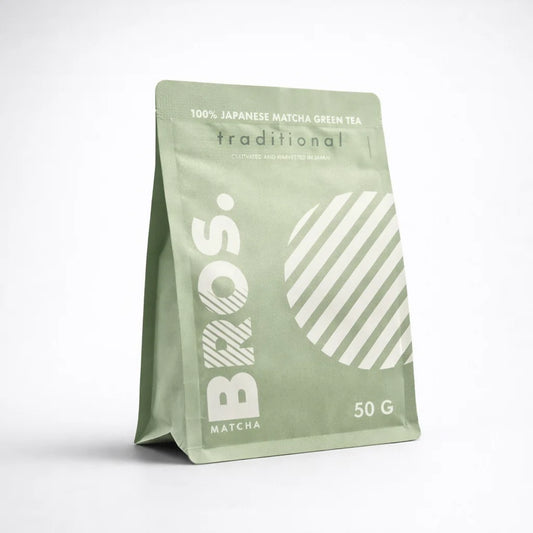
For lattes, smoothies and cold drinks, traditional matcha works well. If you want the highest L-theanine concentration, reach for ceremonial matcha from the first harvest, stone-ground. And if you're curious about the practical side of preparation, check out our matcha latte recipe.
Sources
- Uchida, K. et al., Effect of matcha green tea on cognitive functions and sleep quality in older adults with cognitive decline: A randomized controlled study over 12 months, PLOS ONE, 2024, doi: 10.1371/journal.pone.0309287
- Sohail, A. et al., The Cognitive-Enhancing Outcomes of Caffeine and L-theanine: A Systematic Review, Cureus, 2021, doi: 10.7759/cureus.20828
- Nawarathna, G.S. et al., High-dose L-theanine–caffeine combination improves neurobehavioural and neurophysiological measures of selective attention in acutely sleep-deprived young adults, British Journal of Nutrition, 2025, doi: 10.1017/S0007114525104169
- Baba, Y., Kaneko, T., Takihara, T., Matcha consumption maintains attentional function following a mild acute psychological stress without affecting a feeling of fatigue: A randomized placebo-controlled study in young adults, Nutrition Research, 2021, 88: 44–52, doi: 10.1016/j.nutres.2020.12.024
- Kurauchi, Y. et al., Matcha Tea Powder's Antidepressant-like Effect through the Activation of the Dopaminergic System in Mice, Nutrients, 2023, 15(3), 581
- Xu, R. et al., Effect of green tea consumption on blood lipids: a systematic review and meta-analysis of randomized controlled trials, Nutrition Journal, 2020, doi: 10.1186/s12937-020-00557-5
- Wang, Y. et al., Effects of green tea catechin on blood pressure and lipids in overweight and obese population — a meta-analysis, Heliyon, 2023, doi: 10.1016/j.heliyon.2023.e21228
- Peng, X., Zhou, R. et al., Effect of green tea consumption on blood pressure: A meta-analysis of 13 randomized controlled trials, Scientific Reports, 2014
- Zamani, M. et al., The effects of green tea supplementation on cardiovascular risk factors: A systematic review and meta-analysis, Frontiers in Nutrition, 2023
- Pang, J. et al., Effect of Acute and Chronic Dietary Supplementation with Green Tea Catechins on Resting Metabolic Rate, Energy Expenditure and Respiratory Quotient: A Systematic Review, PMC7922336
- Sokary, S. et al., The therapeutic potential of matcha tea: A critical review on human and animal studies, Current Research in Food Science, 2023, PMC9792400
- Yunomi, The Myth of Matcha and the Claim It Has 137x Antioxidants of Green Tea, yunomi.life, 2018
- Harvard Health Publishing, Matcha: A look at possible health benefits, health.harvard.edu, 2024
- NCEZ / PZH, Is drinking matcha a healthy trend?, ncez.pzh.gov.pl, 2025
- EFSA Panel on Dietetic Products, Nutrition and Allergies, Scientific Opinion on the Safety of Caffeine, EFSA Journal, 2015
- Jia, Y. et al., (-)-Epigallocatechin-3-Gallate Protects Human Skin Fibroblasts from Ultraviolet A Induced Photoaging, Clinical, Cosmetic and Investigational Dermatology, 2023, doi: 10.2147/CCID.S398547
- Green Tea Catechins as Perpetrators of Drug Pharmacokinetic Interactions, Clinical Pharmacology & Therapeutics, 2025, doi: 10.1002/cpt.3547
- Lai, Y-W., Huang, S-M., Tea consumption affects the absorption of levothyroxine, Frontiers in Endocrinology, 2022, doi: 10.3389/fendo.2022.943775
- Febrinasari, R.P. et al., Green tea as a cosmetic agent for skin aging: A scoping review, PMC, 2025, PMC12441187
- Rovaldi, E. et al., Epigallocatechin-Gallate (EGCG): An Essential Molecule for Human Health and Well-Being, MDPI International Journal of Molecular Sciences, 2025
- Meyer, B.R., White, H.M., McCormack, J.D., Niemeyer, E.D., Catechin Composition, Phenolic Content, and Antioxidant Properties of Commercially-Available Bagged, Gunpowder, and Matcha Green Teas, Plant Foods for Human Nutrition, Springer, 2023, doi: 10.1007/s11130-023-01121-2