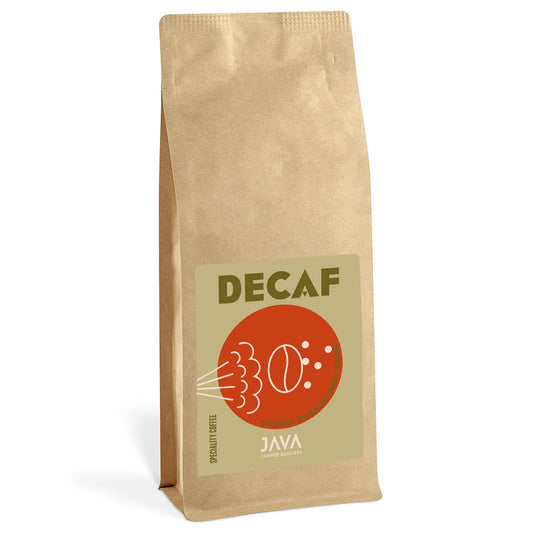
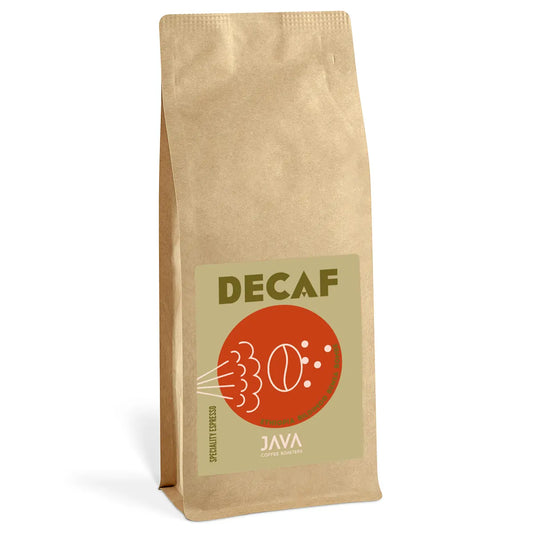
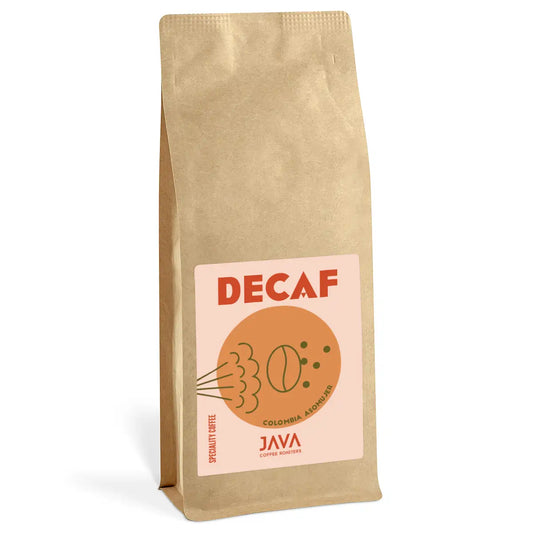
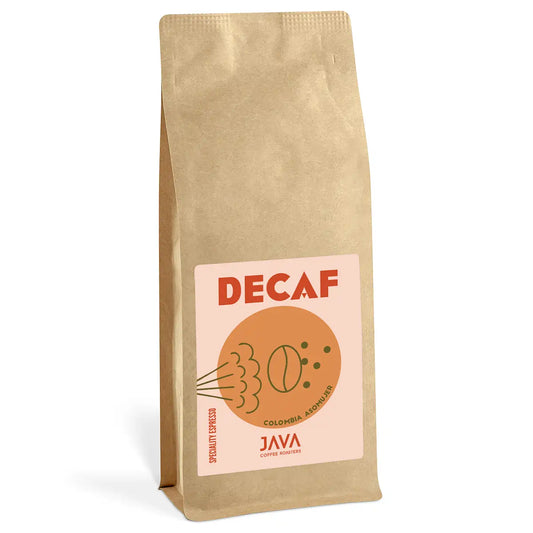
Collection: Decaf Specialty Coffee

Coffee is a daily ritual for many people, but the effects of caffeine can be undesirable for some. Our 100% Arabica specialty delights with full flavor and aroma – all the enjoyment, without the potential side effects.

Our decaf specialty 100% Arabica is crafted naturally – always freshly roasted, caffeine-free without chemicals, made from the highest quality beans. No compromise on taste.

Want to learn more about decaf coffee? Check out our article: Decaf coffee »

  • Decaf refers to coffee from which almost all caffeine has been removed. The decaffeination process takes place at an early stage of green bean processing and can be carried out naturally or using chemical solvents. While chemical methods make caffeine extraction easier, they can negatively affect the quality and aroma of the beans. It’s worth remembering that no coffee is 100% caffeine-free — even decaf contains trace amounts (EU standards allow 0.1–0.3% of the original caffeine content).

    The most common decaffeination methods include both natural and chemical techniques. Among the natural methods are:

    • Swiss Water Process – caffeine is washed out of the beans using hot water and then captured on activated carbon filters. The caffeine-free, flavor-saturated water is then reintroduced to the beans, allowing them to retain their natural taste. The process uses no chemical solvents, ensuring safety and high quality.
    • CO₂ Process (Supercritical Carbon Dioxide) – carbon dioxide under high pressure acts as a solvent to remove caffeine. In its supercritical state, CO₂ penetrates the beans and binds with caffeine molecules, which are then removed upon depressurization. Flavor compounds remain intact, preserving the coffee’s aroma. This technique is efficient and environmentally friendly.
    • Chemical solvent methods – these use organic solvents such as methylene chloride (dichloromethane) or ethyl acetate to extract caffeine. The beans are soaked in water and then exposed to the solvent, which removes the caffeine. Afterwards, they are thoroughly rinsed and dried to eliminate any chemical residue. While effective, these methods raise concerns due to the potential impact on flavor and health.

    At JAVA Coffee Roasters, we offer only naturally decaffeinated coffees, free from aggressive chemical agents. We use, among others, the Sugarcane E.A. process (Ethyl Acetate) – an environmentally friendly method that employs a natural solvent derived from fermented sugarcane. The Sugarcane E.A. process removes about 97% of caffeine while preserving the beans’ rich flavor and aromatic complexity.

  • Decaf – What Does It Mean?

    Our decaf is made of the best Arabica beans from the Colombian Cauca region, ripening at an altitude of 1600-1820 m above sea level. At the initial stage of processing, they undergo a natural decaffeination process - Sugarcane E.A. Decaffeination, which is carried out without the use of chemicals. We roast the coffee on an ongoing basis, precisely following the recipe created by the Polish Roaster Champion 2018 - Rafał Kaniewski. It is available in two roasting profiles: espresso and filter. The flavor notes that can be felt in nashem decaf are jasmine, pomegranate and strawberry, which constitute an interesting and balanced composition.

  • Decaf Colombia Cauca — What Is Our Decaf Coffee Like?

    Our flagship decaf coffee, Decaf Colombia Cauca, is made from carefully selected Arabica beans grown in Colombia’s Cauca region. Coffee trees thrive there at altitudes of 1,600–1,820 meters above sea level, which encourages the development of a complex and refined flavor profile in the beans.

    At the early stage of processing, the harvest undergoes the natural Sugarcane E.A. Decaffeination process, carried out — as mentioned above — without synthetic solvents. This gentle, natural method allows the coffee to be decaffeinated while preserving its full character and aroma.

    We roast our coffee fresh and to order at our roastery, following a precise recipe created by Rafał Kaniewski, the 2018 Polish Roasting Champion.

    Decaf Colombia Cauca is available in two roast profiles: espresso and filter (for pour-over brewing). Espresso roast enhances the coffee’s depth and sweetness, filter roast highlights its delicacy and fruity notes.

    In the cup, you’ll find aromas of jasmine, pomegranate, and strawberry, which together form an elegant, well-balanced flavor composition. To fully enjoy the taste of our decaf coffee, it’s worth matching the brewing method to the roast profile: Espresso roast works best in espresso machines (manual or automatic) and in a classic moka pot. Filter roast is ideal for pour-over methods such as V60, Chemex, AeroPress, or French Press. Properly adjusting the coffee-to-water ratio and brewing time (a slightly higher dose can improve the body of decaf coffee) helps to bring out its full aroma and flavor. A well-brewed specialty decaf coffee can taste every bit as rich and satisfying as its caffeinated counterpart.

  • How Different Is Decaf from Regular Coffee?

    High-quality decaf coffee doesn’t differ much in taste from traditional coffee with caffeine. Thanks to natural processing methods and fresh roasting, it retains the same characteristic aromas and flavors — allowing you to enjoy the full coffee experience with almost no perceptible difference. The only thing decaf lacks is the stimulating effect of caffeine — it doesn’t raise blood pressure or heart rate, and it doesn’t cause that familiar sense of alertness. What’s more, decaf coffee still contains most of the valuable nutrients found in regular coffee. In fact, it even has a slightly higher level of vitamin B3 (niacin) and provides essential minerals such as potassium and magnesium. It’s also a great source of antioxidants, which help protect the body’s cells.

    Regular coffee consumption — whether caffeinated or decaf — offers similar health benefits. It’s associated with a lower risk of cardiovascular diseases, type 2 diabetes, liver disorders, and even some cancers. In other words, by giving up caffeine, you’re not giving up the health-promoting properties of coffee — you can still supply your body with polyphenols and antioxidants that support heart function and metabolism.

  • Decaf as an Alternative to Regular Coffee

    Decaf coffee is the perfect solution for coffee lovers who, for various reasons, need to limit or eliminate caffeine from their diet. It’s chosen by people who love the taste and ritual of coffee but want to avoid the effects of overstimulation. Decaf is also a great option for those who drink large amounts of coffee every day — replacing part of their daily intake with a decaffeinated version helps reduce overall caffeine consumption without giving up their favorite flavor.

    It’s especially recommended for individuals who experience adverse reactions to caffeine. If you suffer from insomnia, chronic headaches, high blood pressure, or heart rhythm disorders, decaf coffee allows you to enjoy your espresso without the risk of worsening these conditions. Decaf is also a suitable choice for pregnant and breastfeeding women, who should limit caffeine intake. While it’s generally best to minimize coffee consumption during these sensitive periods, decaf provides a gentle alternative — letting you occasionally enjoy the familiar taste of espresso or cappuccino without burdening your body with caffeine.

  • Decaf Coffee Beans vs. Instant – Taste and Quality

    There are several types of decaf coffee available on the market — both whole-bean (for grinding and brewing) and instant. While instant coffee is tempting for its convenience, it simply can’t match the flavor and quality of coffee brewed from freshly ground beans. The production of instant coffee (through multiple water extractions, spray drying, or freeze-drying) leads to the loss of many valuable aromatic compounds naturally present in coffee. Moreover, instant coffee loses part of its antioxidants and beneficial compounds during the complex industrial process. When decaffeination is added to this already intensive treatment, the result is often a weaker brew — both in flavor and aroma.

    In practice, even the best decaf instant coffee can’t compare to the richness of coffee brewed from freshly roasted, freshly ground beans. High-quality beans — especially from the specialty segment — retain most of their natural characteristics when decaffeinated using gentle, natural methods, resulting in a cup that tastes almost as rich as traditional coffee. By choosing 100% Arabica decaf whole-bean coffee from a trusted roaster, you get a premium product — free from chemical aftertaste, full of natural aroma, and safe for your health. This kind of coffee lets you enjoy your favorite cappuccino or pour-over at any time of day — without compromise and without caffeine side effects.

  • Sugarcane E.A. decaffeination process: DOWNLOAD