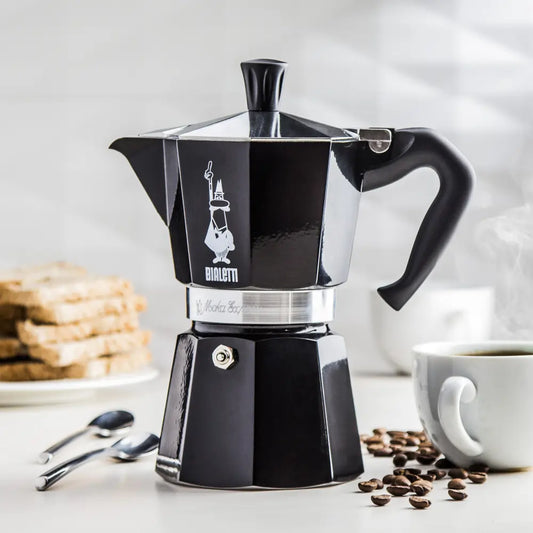
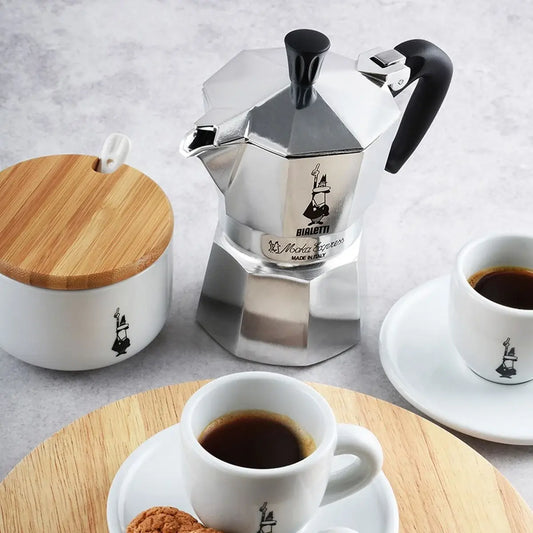
A moka pot (also known as a moka maker or cafetiere) is a small pressure-based coffee brewer that has enjoyed unwavering popularity for nearly a hundred years. Its design is simple: it consists of a lower aluminium or steel water chamber, a filter basket for ground coffee, and an upper chamber for the finished brew. When heated on a stove (gas, electric, or induction in compatible models), the water turns to steam and creates pressure (around 2 bar). This pressure forces hot water through the ground coffee into the upper chamber, producing a strong, concentrated brew. The result is an intensely aromatic coffee with a characteristic creamy foam on the surface — which is why the moka pot is often casually called a "little home espresso maker."
What types of moka pots are there?
The moka pot was invented in 1933 by an Italian — Alfonso Bialetti. The first brewer of this type was made of aluminium, and to this day many moka pots on the market are still aluminium models. However, when induction hobs entered our kitchens, there was also a need to create coffee brewers made from ferromagnetic materials — such as steel.

Moka pots differ mainly in their material and compatibility with different types of stoves. Traditional models are aluminium — lightweight and great at conducting heat, but not compatible with induction hobs (unless you use a special adapter). There are also stainless-steel moka pots — durable and resistant to mechanical damage, and their magnetic steel base makes them suitable for induction cooktops. One example is the Bialetti Moka Induction — it has a steel boiler for induction and an aluminium upper chamber, combining the best features of both materials. Thanks to this, it works on all types of stoves, including induction.
You can also find electric moka pots — standalone plug-in brewers with a built-in heating base. They work on the same principle (pressure brewing), but include extra features such as automatic shut-off once brewing is complete. Regardless of the type, most moka pots require only ground coffee and water — with no paper filters or capsules.

How to brew coffee in a moka pot?
Step-by-step moka pot brewing.
- Pour boiling water up to the safety valve. Fill the lower chamber with filtered, freshly boiled water to just below the safety valve.
- Prepare the coffee. Add medium-ground coffee (a sand-like texture) to the filter basket. Fill it to the rim, but do not tamp — a loose bed ensures even water flow.
Not sure which coffee to choose? Check out our expert's ranking of the best coffees for a moka pot! - Assemble the moka pot. Put all parts together (filter basket with coffee, lower and upper chambers). Make sure the threads are tightly screwed and the gasket is in place. Since the lower chamber is hot from the water, hold it with a cloth while tightening.
- Brewing. Place the moka pot on the stove, open the lid and heat on medium. Steam gradually pushes the water upward through the coffee. When you see a steady, calm stream of coffee in the upper chamber, you can turn off the heat — brewing will continue evenly on its own. Don't wait for all the water to move to the top: over-extracted brew loses its aroma and turns bitter. To stop extraction at the right moment, cool the moka pot for 2–3 seconds under cold running water or dip the lower chamber into a bowl of cold water prepared in advance.
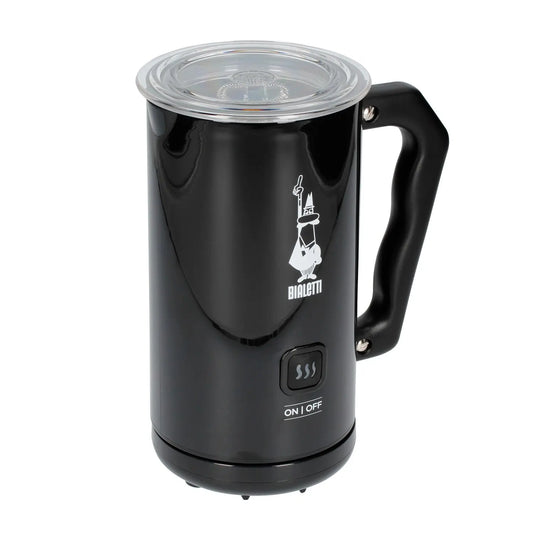
- Serving. Before pouring, gently stir the brewed coffee in the upper chamber to even out the flavour. Serve the concentrated brew into cups. A moka pot produces a strong coffee — it works best for small espresso-style servings or as a base for milk drinks (cappuccino, latte).

Which coffee should you choose for a moka pot?
For a moka pot, medium or dark roasted coffees ground to the texture of coarse sand work best. The variety matters too: 100% Arabica with a pronounced chocolate-nutty profile gives a full, balanced brew without unpleasant bitterness.
Roast level — what to choose for a moka pot?
| best option
Medium roast Preserves complex flavour notes — fruity and floral — with moderate acidity. Gives a smoother yet still full aroma. A good choice when the character of the bean matters to you. |
good option
Pronounced chocolate and nutty notes, low acidity. The moka pot's high temperature and pressure work in your favour here — the result is a smooth, intense brew without sharp edges. |
Not recommended: ✕ Light roast
Grind size: too fine a grind can lead to over-extraction (bitter, astringent taste), while too coarse a grind results in an under-extracted, watery brew. The sweet spot is a medium grind (like coarse sand), which ensures even water flow and a balanced extraction. Want to learn more about grind size for different brewing methods? Read our guide.
Water: use fresh, soft water at around 90–95°C. Hard water can worsen the taste (a metallic aftertaste) and cause limescale build-up in the moka pot, so it's worth filtering your water or descaling the brewer regularly.
Bean freshness: use freshly roasted coffee and grind just before brewing. At JAVA Coffee Roasters we recommend 100% Arabica blends from South America (e.g. Brazil, Colombia) — they have a full nutty-chocolate profile and low acidity, making them ideal for a strong moka pot brew.

Why is specialty-grade Arabica the best choice for a moka pot?
Specialty coffee makes up only a small percentage of all beans available on the market. It comes from different corners of the world — Honduras, Brazil, Papua New Guinea, Tanzania, Guatemala. What matters most, however, is that these beans are sourced from small, trusted farms where cultivation is traditional and sustainable. Hand-picking ensures that only ripe cherries move forward for processing, and high-altitude growing conditions indicate top-quality beans.
Before the beans are roasted, they go through a selection process that identifies only the perfect ones — without defects. The coffee is then evaluated by certified tasters, and only after scoring at least 80/100 can it be called specialty coffee. In our roastery you'll find moka pot coffees with different sensory profiles, featuring sweet notes of fruit, nuts, and chocolate. The complex, exceptionally rich flavour of 100% specialty-grade Arabica lets you brew coffee where you can taste strawberry, rhubarb, dried plum, apricot, forest berries, marzipan, or dark chocolate.

Mexico Nahua – balanced exotica (omni roast)
Mexico Nahua is an exceptionally balanced single origin coffee from Mexico that will win over anyone who enjoys the combination of cocoa and citrus notes. Its flavour profile brings together chocolate depth with bright citrus accents, resulting in a harmonious cup. Mexico Nahua is also an omni roast — a roast profile designed to perform well across different brewing methods. That means you can use it in a moka pot, espresso machine, drip brewer, or French press with equally good results.
That versatility translates into a range of sensory experiences — each brewing method reveals a different side of the same coffee. In a moka pot, Mexico Nahua gives you the full sweetness of cocoa, cut through by a lively note of lemon or orange. It's a choice for those looking for originality and complexity in a cup. Mexico Nahua proves that a more fruit-forward moka pot coffee can taste exceptional — all it takes is careful brewing.
Moka pot care & maintenance
Proper care helps your moka pot last longer and keeps your coffee tasting its best. After each use, unscrew the moka pot and rinse all parts under warm water — without detergent. Do not use a dishwasher or harsh cleaning agents (detergents can damage aluminium surfaces and negatively affect coffee taste). After washing, leave all parts disassembled until fully dry to avoid moisture and mould. Pay special attention to the gasket and filter basket — check the rubber gasket regularly (replace every few months or when it hardens) and remove coffee residues from the filter after each use.
With regular use, water can leave limescale deposits. Every few weeks, descale the lower chamber using natural solutions (e.g. vinegar) or dedicated descaling products for coffee machines. This prevents build-up and preserves the full aroma of your coffee.

A moka pot that rewards you with great coffee
A moka pot can produce a truly rich, aromatic coffee — as long as you follow the simple rules in this guide. Once you master the rhythm, it becomes a reliable, everyday way to enjoy an excellent cup at home, on its own or as a base for milk-based drinks.
If you're looking for proven equipment to start with — or want to replace your current model with a classic — the JAVA Coffee Roasters offer includes moka pots from Italian brand Bialetti. We especially recommend the Bialetti Moka Express 6tz — a traditional aluminium cafetiere. A timeless choice that fits perfectly into a home coffee ritual.
Did you know? Renato Bialetti — Alfonso's son and the man who brought the brand to global fame — asked that after his death his ashes be placed inside a Moka Express. His wish was granted: at his funeral ceremony in Omegna in 2016, he was laid to rest exactly as he had wanted.
Frequently asked questions about coffee for a moka pot (FAQ)
Does a moka pot work on an induction hob?
A standard aluminium moka pot won't work on induction — you'll need an adapter or a model designed specifically for induction. Manufacturers offer "induction" moka pots with a steel base. The Bialetti Moka Induction, for example, has a steel boiler that makes it compatible with gas, electric, and induction cooktops. Look for the "induction" marking on the product or confirm the base material before buying.

How is a moka pot different from a French press?
A French press is an immersion method with a plunger and mesh filter — you brew by steeping coffee in hot water and then mechanically filtering out the grounds. French press coffee is usually milder, with a fuller body and some fine particles in the cup. A moka pot works via steam pressure — producing a much stronger, more concentrated brew with a clear crema-like foam and no grounds. In short: a French press gives you a gentle, aromatic coffee with a bit more sediment; a moka pot delivers an intense essence closer to Italian espresso.

Which coffee should you choose for a moka pot?
You'll get the best results with coffees suited to moka pot brewing — medium ground and medium or dark roasted (for example, Arabica blends from Brazil or Colombia). Grind just before brewing — freshly ground coffee makes a significant difference to aroma.

How should you care for a moka pot after brewing?
After brewing, remove the moka pot from the heat, let it cool, then unscrew it and empty any leftover water and grounds. Rinse the filter basket and internal surfaces with clean water, avoiding detergents. Replace the gasket regularly. After washing, leave the moka pot open to dry. Regular descaling — especially with hard water — will extend the brewer's lifespan and prevent any negative changes in coffee taste.
Sources
- Specialty Coffee Association (SCA) – Coffee Brewing Handbook, extraction standards (18–22% yield) and dissolved solids (TDS 1.15–1.45%).
- ISO 3509:2005 Coffee – Vocabulary – standards defining coffee-related terminology.