Japanese origin is an important reference point when it comes to matcha, but it's only the first chapter of the flavour story. Growing region, soil, microclimate, harvest timing, and cultivar: these are what largely decide whether a matcha has a deep, almost broth-like umami or a light, grassy freshness. Here's where matcha actually comes from, and what's worth knowing beyond the "Made in Japan" label.

Why does matcha's origin matter?
Matcha's origin works like terroir in wine or coffee: soil, climate, and altitude directly shape the flavour in the bowl. Two matchas from the same cultivar and the same harvest year can taste completely different if they come from different regions of Japan.
A "Product of Japan" label is only the start of the story. Japan is an archipelago with major climate differences: a bush growing on Kagoshima's volcanic plains produces a chemically different leaf than one from Uji's misty mountain fields. Regional conditions leave their mark on the leaf, which is why origin isn't a trivia note on the label, it's a real driver of flavour, colour, and umami intensity.
Where does matcha come from: a short history
In China, tea was already being ground into powder during the Tang dynasty (618–907), but the culture of whisking powdered tea into hot water to a froth, known as diǎnchá, developed particularly during the Song dynasty (960–1279). In 1191, the Buddhist monk Eisai brought tea seeds from China to Japan, along with the powdered-tea preparation culture he'd learned while studying in Song-dynasty China.

In Japan, this tradition developed in an entirely new direction. In the 16th century, alongside the growth of the Japanese tea ceremony, chanoyu, tea masters in the Uji region began developing the shading technique known as ōishita saibai. They were looking for a gentler, less astringent flavour, and shading delivered exactly that. Today we know that limiting light exposure boosts L-theanine content and reduces the formation of the catechins responsible for astringency, deepening umami. It's this technique, refined since the 16th century, that's behind the characteristic flavour and colour of today's matcha.
Want to know how matcha is made step by step? Check out our guide.
Also read: Matcha – What Is It and Why Drink It?
Matcha growing regions in Japan
A handful of regions in Japan stand out clearly on matcha's map. Each has a different climate, different soil, and a different specialism: from Uji's historic prestige, through Nishio's industrial precision, to Kagoshima's volcanic power.
Uji (Kyoto): the birthplace of matcha
Uji sits in Kyoto Prefecture, though the broader, commercial term "Uji-cha" also covers tea from neighbouring prefectures, Shiga, Mie, and Nara, as long as it's processed in the Uji region. The town lies in a mountain-ringed basin where morning mist creates a distinctive microclimate. Combined with deliberate shading before harvest, this favours deeply umami teas. Uji matcha typically has a rich, layered flavour, gentle sweetness, and a pronounced but not overpowering bitterness: it's the reference point other regions get compared to.

Did you know? The term "Uji matcha" is sometimes treated as almost a synonym for top quality, similar to "Champagne" in the world of sparkling wine. The region has the status of a kind of tea appellation, though it isn't formally protected the way French geographical indications are.
Nishio (Aichi): the leading producer
Nishio is, in practice, a matcha monoculture: according to industry sources, the large majority of local crops go straight into tencha production, the raw material for matcha. It's one of Japan's leading production hubs, though not necessarily the country's largest. Fertile, alluvial soil and a mild climate support strong consistency batch to batch. The flavour is balanced: brighter, nuttier, and less layered than Uji, but very stable season after season. This region, together with neighbouring Shizuoka, is where the Yōkiro matcha in JAVA Coffee's range comes from.

Kagoshima (Kyushu): volcanic soil and organic farming
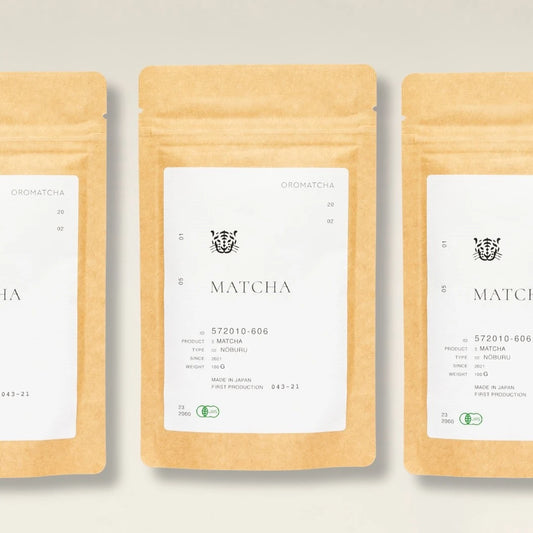
At Japan's southern tip, at the foot of the Sakurajima volcano, lies Kagoshima: for decades the country's second-largest tea region, though in recent years increasingly competing with Shizuoka for the top spot. According to Japan's Ministry of Agriculture, Forestry and Fisheries (MAFF), Kagoshima overtook Shizuoka in first-flush (ichibancha) aracha production for the first time in 2025, but on August 18, 2026, MAFF announced that Shizuoka had reclaimed the lead, producing 10,700 tonnes against Kagoshima's 9,610 tonnes, its first return to the top in two years. It's a good illustration of how quickly the balance of power shifts between Japan's tea regions from one season to the next. Flat, volcanic fields allow for mechanical harvesting, which significantly lowers production costs. Kagoshima matcha tends to be smooth, naturally sweet, and less bitter than matcha from mountain regions, and the warmer climate makes organic farming easier here, which makes the region one of the leaders in JAS-certified organic matcha. This is where Oromatcha comes from, one of the JAS Organic-certified matcha lines available at JAVA Coffee.

Yame (Fukuoka): exceptional umami
Yame is less widely known but prized by connoisseurs, a mountain region in Fukuoka. Cooler nights, mist off the Yabe and Chikugo rivers, and decades of gyokuro-growing experience mean Yame matcha is often described as one of the most umami-rich of all the regions: almost broth-like, intensely vegetal, with minimal bitterness. The local gyokuro variety, Yame Traditional Hon Gyokuro, holds protected geographical indication status, which shows how seriously quality and origin are taken here.

Shizuoka: Japan's historic tea centre
Shizuoka has accounted for close to 40% of all Japanese tea production for decades, and although it briefly lost the top spot in first-flush production to Kagoshima in 2025, it reclaimed the lead in August 2026 with 10,700 tonnes against Kagoshima's 9,610 tonnes. Shizuoka's production is mostly sencha, not matcha. The region has well-drained, volcanic soil and a mild climate that favour a fresh, lightly astringent flavour profile. Shizuoka matchas tend to be lighter and more "grassy" than those from Uji or Yame: a good choice for anyone looking for a cleaner, less creamy character.

| Region | Prefecture | Soil / climate | Flavour profile | Characteristics |
|---|---|---|---|---|
| Uji | Kyoto | Clay soil, morning mist | Deep umami, elegant sweetness | Birthplace of matcha, over 800 years of tradition |
| Nishio | Aichi | Alluvial soil, coastal climate | Balanced, nutty | Matcha monoculture, high consistency |
| Kagoshima | Kagoshima (Kyushu) | Volcanic | Smooth, naturally sweet | Major hub for organic production |
| Yame | Fukuoka | Mountainous, cool nights, river mist | Exceptionally intense umami, "broth-like" character | Protected geographical indication (gyokuro) |
| Shizuoka | Shizuoka | Volcanic, well-drained | Fresh, lightly astringent | Production dominated by other tea types |
How harvest timing affects quality: ichibancha, nibancha, sanbancha
Harvest timing affects matcha's quality just as much as region does: the first spring harvest (ichibancha) yields the leaf richest in amino acids, which is why it usually goes into the highest-grade matcha; later harvests give a more pronounced, more astringent flavour.
Worth clarifying up front: "ceremonial grade" matcha is a commercial term, used mainly outside Japan: it isn't an official, regulated category under Japanese law or the tea industry. So instead of a rigid split like "ichibancha = ceremonial, sanbancha = culinary," it's better to think of it as a quality tendency.

Tea bushes in Japan are harvested several times a year. Ichibancha ("tea number one") is the harvest at the turn of April and May: young shoots that survived winter accumulate amino acids, including L-theanine, over the months, giving the sweetest, most umami-rich leaf of the season. It's ichibancha that most often becomes matcha meant to be drunk "straight," with just water. Nibancha, the summer harvest in July, has fewer amino acids and more catechins, giving a more pronounced, astringent profile: which is why "traditional" matcha blends often combine first- and second-harvest leaves. Sanbancha, the third harvest, more often goes into culinary uses and milk-based drinks, where a pronounced bitterness isn't a problem, and even helps cut through milk or sugar in baking.
Wondering why longer shading affects matcha's flavour so strongly? Check out L-theanine – What It Is and How It Works with Caffeine, prepared by our expert!
Tea bush cultivars: Yabukita, Samidori, Okumidori, and more
Beyond region and harvest, matcha's flavour is also shaped by the specific bush cultivar, much like a grape variety shapes a wine's character. Many tea cultivars are grown in Japan, but a handful dominate matcha production:
- Yabukita: Japan's most popular cultivar, currently accounting for around 62% of the country's tea-growing area, though its share is gradually shrinking in favour of newer cultivars. It gives a bold, classic, lightly astringent flavour: the reference point for "typical" green tea.
- Samidori: a cultivar strongly associated with Uji, prized for its elegant sweetness and smooth, creamy texture. A frequent choice for high-quality matcha meant to be drunk with just water.
- Okumidori: buds later than Yabukita (hence the name: "oku," meaning late), which lets it avoid frost and develop a deeper colour and more pronounced umami. It also works well combined with milk.
- Saemidori: a cross between Yabukita and Asatsuyu, prized for its vivid green colour and high sweetness with minimal bitterness.
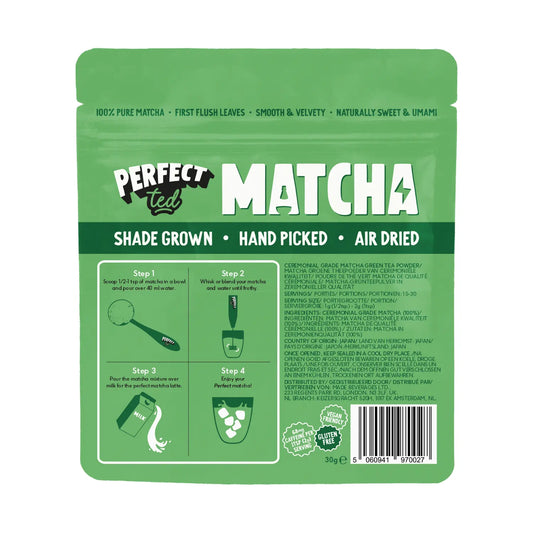
Many premium matchas are actually blends of several cultivars. Producers combine them deliberately to achieve a particular balance of sweetness, umami, and colour. One example is the PerfectTed matcha available at JAVA Coffee, built on a Yabukita base supplemented with Okumidori and Saemidori: each one contributes a different element to the final flavour profile.
Also read: PerfectTed: the matcha just entering Poland
How to verify matcha's real origin
The easiest way to verify matcha's real origin is through a specific prefecture and milling date on the label: "Product of Japan" alone, without a region, isn't enough. That's a separate question from JAS Organic certification, which confirms organic growing practices, not region of origin.
Producers who list a specific region, cultivar, and milling date are giving you a genuine signal of supply-chain transparency: a good starting point for assessing a brand's credibility, even though it doesn't by itself guarantee top-quality leaf. If a label says nothing more than "Japan," it's worth asking the seller directly about region and harvest.

Organic certification is a separate matter. Japan's JAS certification (Japan Agricultural Standard) confirms the organic origin of the raw material: it's the Japanese equivalent of the EU's organic label. In practice it covers separate certifications for the growing stage and for processing, so a single product can need more than one certificate on its way from field to package. JAS speaks to growing method, though, not which region of Japan the leaf came from: these two pieces of information are worth checking separately.
In JAVA Coffee's matcha collection you'll find products with stated regional origin, one reason it's worth checking not just the country, but the specific place on the map of Japan.
Where else is matcha produced?
Not just in Japan. Although modern matcha is most strongly associated with Japan, powdered green tea is also produced elsewhere: above all in China, where, incidentally, the historical roots of this tea-preparation method lie. According to industry estimates, Chinese matcha production may have reached around 5,000 tonnes in 2025. That figure should be treated as an estimate, though, since China doesn't keep separate official statistics for domestic matcha production. On a much smaller scale, powdered green tea is also produced in South Korea, Taiwan, and the United States, among others, though none of these countries currently come close to China's or Japan's volumes.
One of China's main production hubs is Guizhou province, and in particular Jiangkou County, which sold over 1,200 tonnes of matcha in 2024, including to overseas markets.

Country of origin alone, though, doesn't determine quality. What matters far more is how it's produced: shading the bushes, the raw material used, the processing method, and the traceability of the producer and region. Not every green tea powder is matcha, then: how the leaves are grown and processed is what counts.
This matters for quality control too. We consume matcha as the whole, ground leaf, whereas a classic infusion only transfers part of what's in the leaf into the water, including any potential contaminants, such as heavy metals.
That's why transparency about origin and quality control of the raw material matter so much. This applies to matcha produced in both China and Japan alike: country of origin on its own doesn't replace information about the specific region, producer, and production method.
FAQ: frequently asked questions
Where does the best matcha come from?
There's no single "best" matcha, it depends on the flavour profile you're after. Uji is famous for deep umami and historic prestige, Yame is prized by connoisseurs for exceptionally intense, vegetal umami, and Nishio and Kagoshima offer more accessibly priced, still high-quality matcha with a balanced flavour.
Is matcha from China worse than Japanese matcha?
Not automatically: country of origin alone doesn't determine quality. Chinese powdered green tea and Japanese matcha can, however, differ significantly in cultivar, shading method and duration, and intended use, all of which genuinely affect the final flavour. If you're after traditional matcha to drink "straight," it's worth checking not the country, but whether the product was made from shaded tencha, following the production method proper to matcha: that's a far more reliable signal than origin alone.
What is ichibancha?
Ichibancha is the first spring harvest of tea leaves, usually at the turn of April and May. The leaves accumulate the most amino acids over winter, giving the sweetest, most umami-rich leaf of the season, which is why the highest-grade matcha, meant to be drunk with just water, is most often made from ichibancha.
How do matcha growing regions differ in flavour?
A region's climate, soil, and altitude shape the final profile: Uji gives deep umami and sweetness, Nishio a balanced, nutty character, Kagoshima a smooth, naturally sweet flavour, Yame exceptionally intense, vegetal umami, and Shizuoka a lighter, grassier profile.
Does JAS certification guarantee high-quality matcha?
JAS Organic certification confirms the organic origin of the raw material and a controlled production process, but on its own it doesn't guarantee flavour: quality also depends on region, cultivar, harvest timing, and milling freshness. It's worth treating it as one of several quality signals, not the only one.
Sources
Firsd Tea, Global Matcha Production and Export Status, August 2025 (China matcha production estimates).
Xinhua / Belt and Road Portal, Made Here: Matcha goes global from this mountainous county, May 2025 (matcha sales in Jiangkou County, Guizhou Province, 2024).
Japan's Ministry of Agriculture, Forestry and Fisheries (MAFF), announcement of August 18, 2026 on first-flush aracha production for 2026 (荒茶生産量), as reported by Daiichi-TV, Shizuoka Asahi TV, and Shizuoka Shimbun (at-s.com) via Yahoo! News Japan.
Japan's Ministry of Agriculture, Forestry and Fisheries (MAFF), 宇治茶 [Uji-cha], "Nihon no dentō-shoku zukan" portal (a database of traditional foods and regional products): history of the development of ōishita saibai cultivation in the Uji region and the role of tea masters (including Sen no Rikyū) in the 16th century.
Japan's Ministry of Agriculture, Forestry and Fisheries (MAFF), 令和7年産一番茶の摘採面積、生葉収穫量及び荒茶生産量(主産県) [First-flush harvest and aracha production data, Reiwa 7 / 2025], August 2025.
Japan's Ministry of Agriculture, Forestry and Fisheries (MAFF), geographical indications register: Yame Traditional Hon Gyokuro.
City of Nishio (Aichi Prefecture), official city website: section on matcha and tea production in the region.
Ooika (覆い香), 5 Famous Matcha Regions in Japan (Terroir Guide), 2024.
First Agri B2B, Japanese Tea Regions Explained: A Buyer's Guide to Origin and Quality, 2026.
Japan Tea Export Council: tea cultivar database, as cited in: Blendit, Matcha Cultivars Explained: Saemidori, Okumidori & More, 2026.
Ishiguro Y., Yamashita H., Ikka T., Advances in tea breeding in Japan: from traditional methods to genomic approaches, Breeding Science, 76(1), 76–85, 2026 (MAFF 2025 data).
International Organization for Standardization, ISO 20715:2023 — Tea: Classification of tea types.